

Aviva - Simplifying complexity at scale
Bringing structure to a fragmented global digital estate.
Aviva’s digital estate had grown into a complex network of overlapping journeys shaped by product, marketing, and regulatory demands. This created duplication, inconsistency, and poor user clarity across the experience.
It needed a fundamental rethink.
OverviewThe estate lacked a clear, consistent structure, creating duplication, inconsistency, and poor user clarity, impacting both customer outcomes and operational efficiency.
I led the restructuring of this ecosystem, simplifying experiences, establishing shared systems, and enabling delivery at scale across a global organisation. The work spanned multiple product lines, teams, and markets, requiring alignment across Product, Marketing, Engineering, and Compliance.
The approachThe work addressed three core areas: simplifying complexity, scaling delivery, and defining the role of Aviva.com within the wider ecosystem.

Focus 1
Simplifying complexity across the estate

Focus 2
Scaling delivery through shared systems

Focus 3
Redefining Aviva.com’s role within the ecosystem
Focus 1
Simplifying complexity across the estate
Structural complexity was holding both users and teams back.
The problem
The estate had evolved into overlapping journeys shaped by product structures, marketing priorities, and regulatory constraints.
This created duplication, inconsistent navigation, and unclear decision-making for customers, reducing task success and increasing the cost of maintaining and evolving the platform.
This wasn’t isolated to individual journeys. It was embedded across teams, structures, and ways of working.
The focus
Simplifying the structure without losing the necessary complexity required for regulated financial services.
The solution
I led a comprehensive restructuring of the digital estate, shifting from product-led journeys to a model based on user intent.
This required challenging existing ownership and realigning stakeholders around a new approach.
I rationalised navigation, consolidated duplicated pathways, and established a clearer, more consistent structure across journeys.
The result balanced regulatory constraints with usability, creating a foundation that was both compliant and scalable.
The results
+11.8% increase
in site visits following redesign
+2% growth in customer base
(33.4M users) within 12 months
Ranked #1
in FTSE 100 Digital Maturity Index
Scaled across 9 global markets through a unified structure

Focus 2
Scaling delivery through shared systems
Simplifying the experience wasn’t enough. Delivery needed to scale with it.
The problem
Delivery was fragmented across teams, with no shared standards or system.
Teams operated independently, with no shared definition of quality or consistent way of working, making it difficult to scale products efficiently across markets.
The focus
Establishing a shared system that improved speed, consistency, and quality, and embedding it into how teams delivered.
The solution
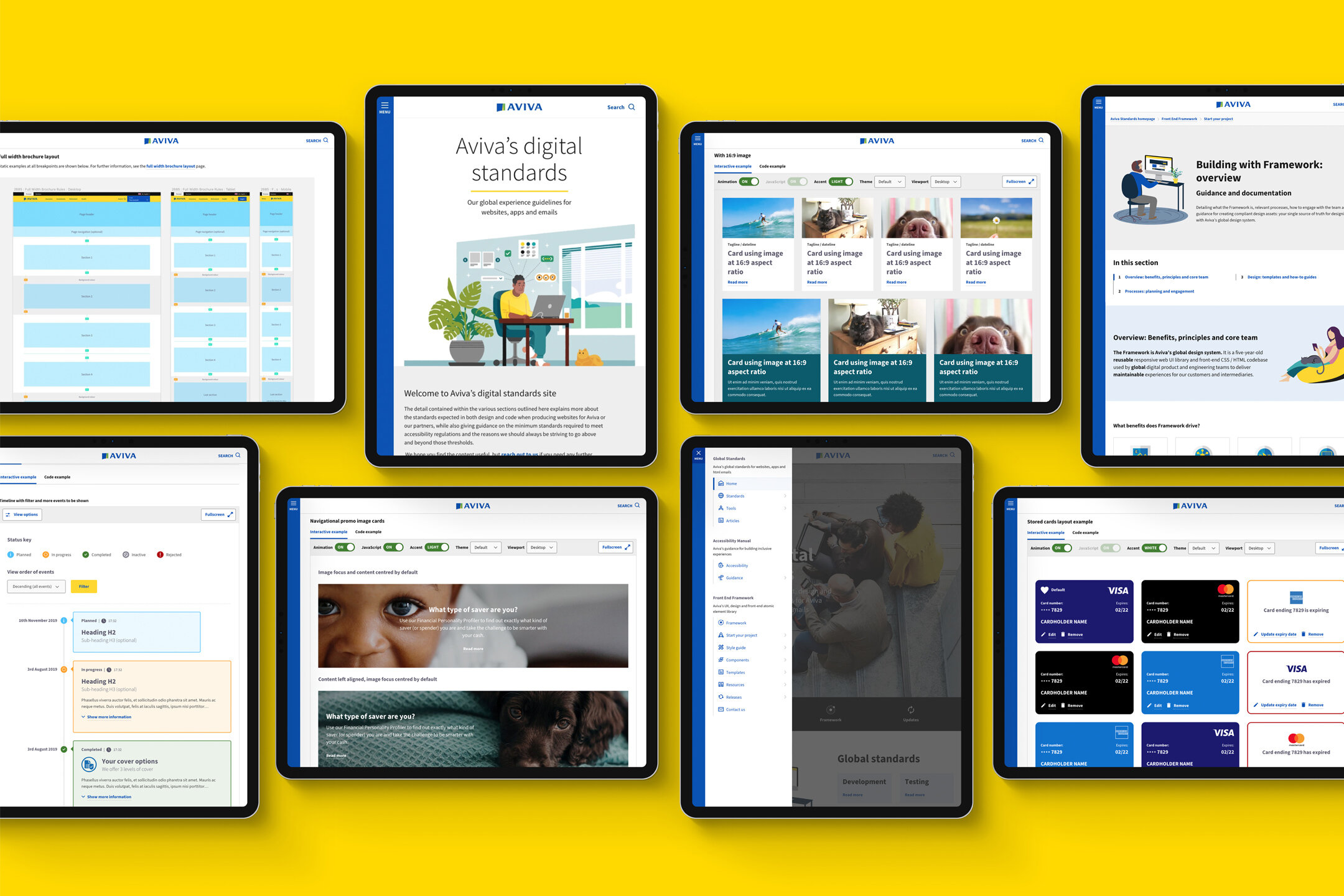
I created and rolled out a shared design system, defining reusable components, patterns, and standards across teams and markets.
More importantly, I embedded the system into delivery rather than treating it as a standalone asset. This meant:
Defining governance and contribution models to support shared ownership
Integrating the system into product and engineering workflows
Establishing clear standards that teams could rely on under pressure
The challenge wasn’t creating the system, but getting teams to adopt and rely on it. This required changing how teams worked, not just introducing new components.
The results
31% faster time to market (277 to 190 hours per person)
£80k average cost saving per £150k+ project budget
230+ reusable components enabling scalable development
Scaled across 9 global markets and multiple product teams
This reduced delivery cost and improved speed while maintaining consistency across teams.
Focus 3
Redefining Aviva.com’s role within the ecosystem
Aviva.com needed a clearly defined role, not just a redesign. As a primary entry point into the ecosystem, its purpose needed to be clear and consistent.
The problem
Aviva.com lacked a clearly defined purpose.
It was constrained by legacy structure, performance limitations, and inconsistent experience design, reducing engagement and limiting its effectiveness as a core digital touchpoint.
It lacked clarity in how it supported both customer needs and broader business objectives.
The focus
Defining the role of Aviva.com within the wider ecosystem, while improving performance, clarity, and engagement.
The solution
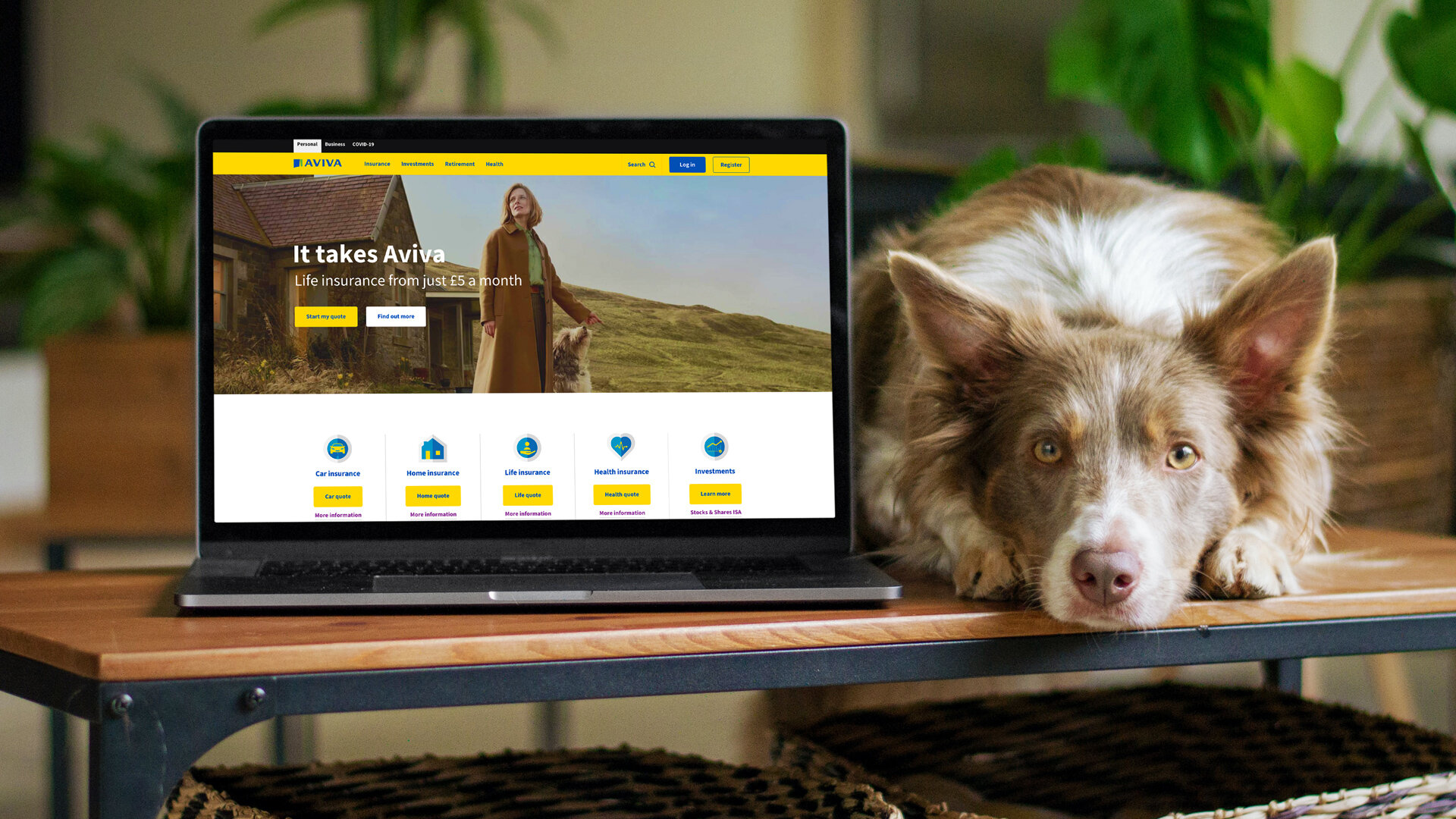
I led the redesign of Aviva.com, restructuring the experience around user intent and simplifying content hierarchy and navigation.
The goal wasn’t just to improve the site, but to define its role within a much larger ecosystem.
The work prioritised mobile-first behaviour, improving scannability, performance, and ease of use across key journeys.
More importantly, it repositioned the site as a core platform within the broader digital estate, rather than a standalone experience.
This created a more coherent connection between Aviva.com and the wider ecosystem.
The results
1.5M annual site visits with 4 min average session
+7% NPS improvement
+21% increase in mobile usage
Page load time reduced to 1.9s

Leadership roleLeading through change
This work went beyond product and platform changes. It required aligning teams, resetting expectations, and establishing clearer ownership across the organisation.

It was delivered during a period of organisational change, balancing ongoing delivery with the need to transform how teams worked.
I led design through this shift, partnering closely with Product and Engineering leadership to maintain momentum while improving quality and consistency across teams.
This moved teams from fragmented, siloed delivery to a structured and consistent approach across the estate.
The result was a shift from a fragmented set of experiences to a structured, scalable platform, improving customer clarity, increasing engagement, and reducing delivery cost.
More importantly, it repositioned design from a delivery function to a driver of business performance.