


Condé Nast - Unified, not uniform
Raising the bar on quality across a global publishing platform.
At Condé Nast, scaling the platform wasn’t just about consistency. It was about raising experience quality across a global estate without flattening what makes each brand distinct.
The challenge wasn’t choosing between standardisation and expression. It was defining how both could coexist within a single system.
OverviewCondé Nast operates across more than 60 sites in over 20 markets, with editorial teams producing content at significant scale.
As the platform grew, experience quality became increasingly inconsistent across brands and markets. Some brands delivered highly crafted editorial moments, while others were constrained by rigid templates and cluttered layouts.
The goal was not to standardise everything, but to raise the baseline of quality across the platform, then enable controlled expression on top of it.
This required shifting quality from a subjective design concern into something structured, measurable, and embedded within the system.
The challengeThe challenge was scaling quality without flattening identity.
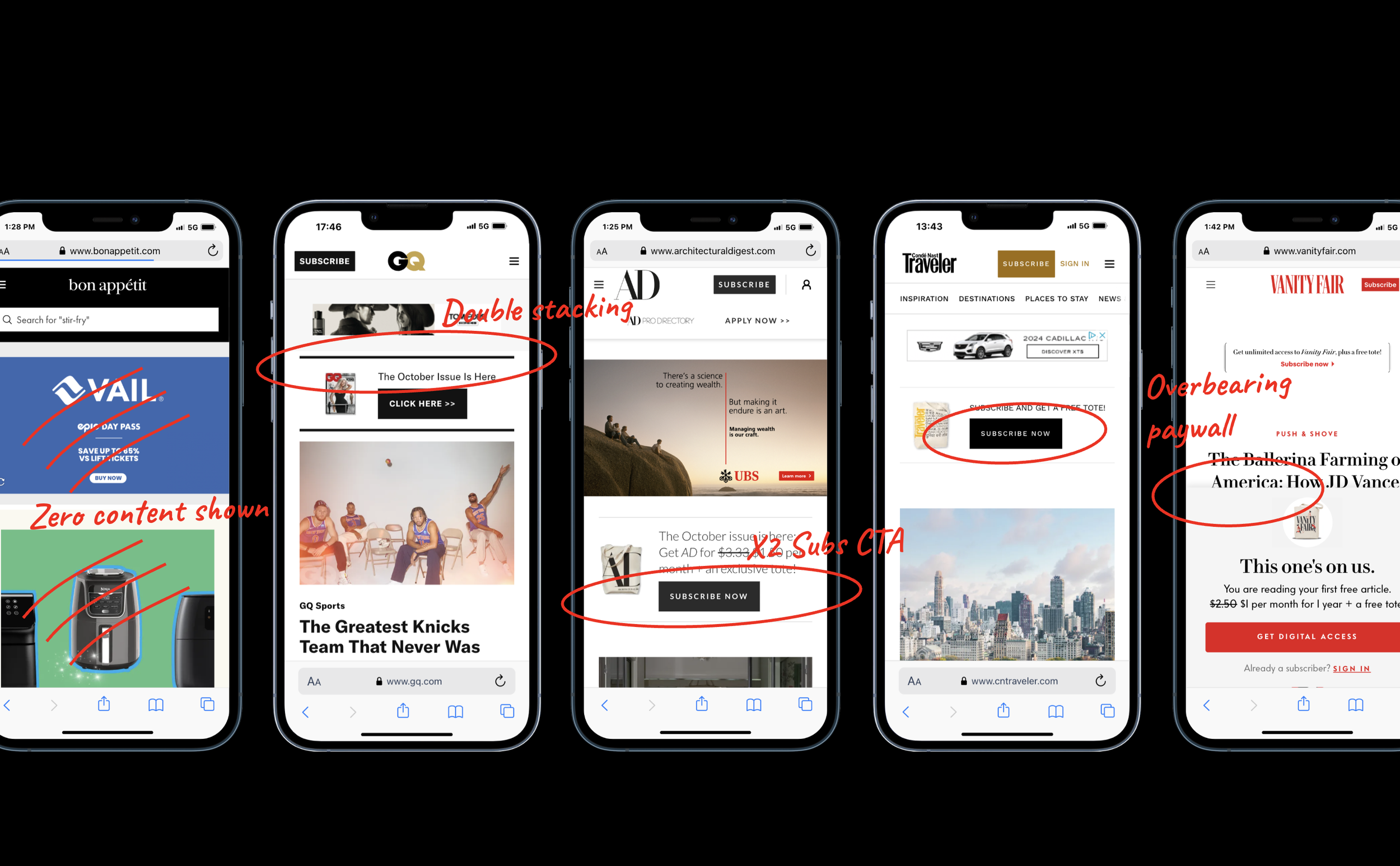
Editorial teams needed the freedom to create distinctive, memorable moments. Engineering needed predictable systems that could scale. The business required consistency in performance and monetisation.
These needs naturally pull in different directions.
If everything is standardised, brand identity is lost. If everything is bespoke, the platform becomes difficult to scale.
The problem was defining where to raise the baseline and where to preserve flexibility.
Raising the floorBefore expanding what the platform could express, the first step was to raise the floor.
The experience across the platform had become cluttered, inconsistent, and often driven by competing priorities rather than user needs.
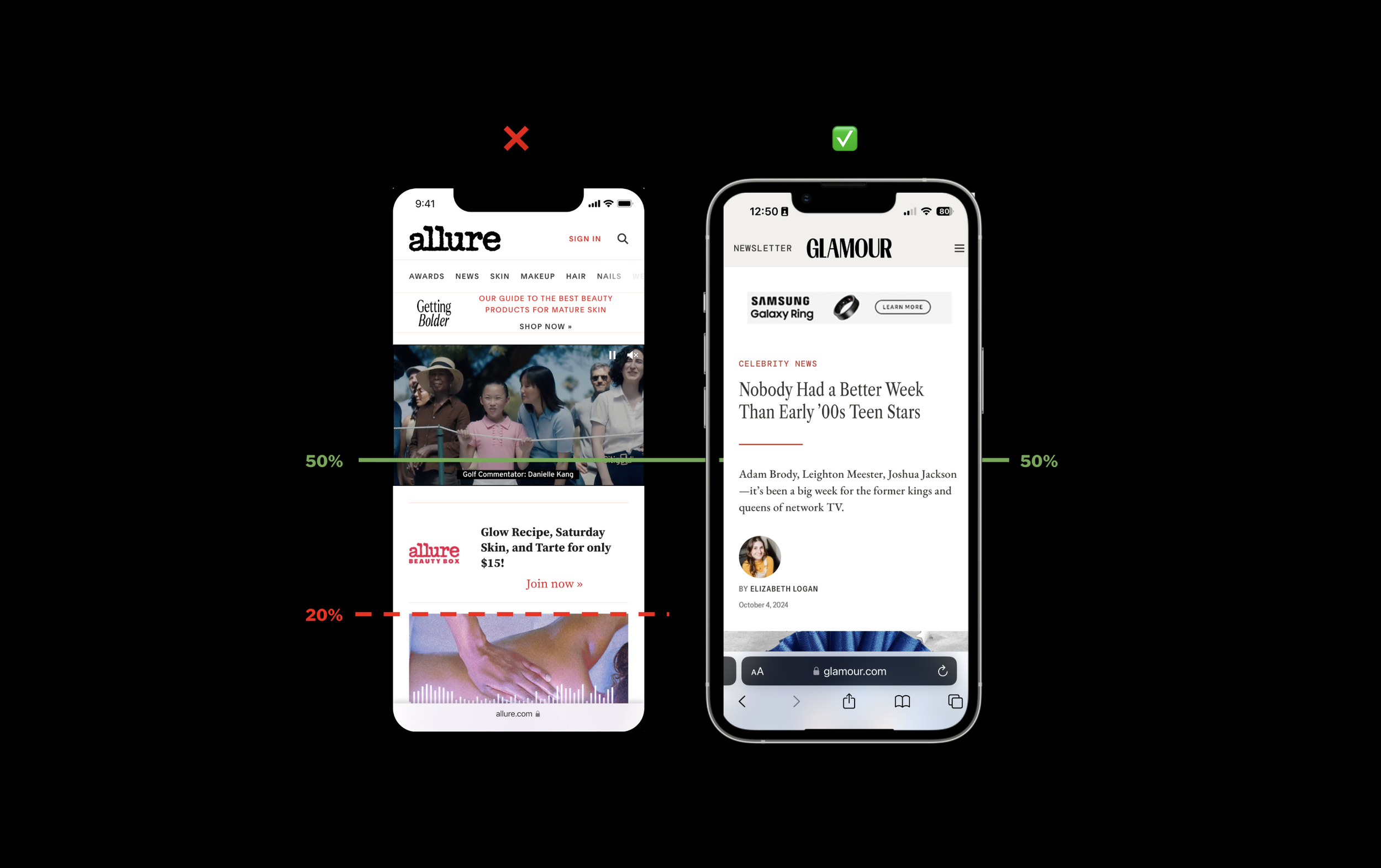
To address this, I introduced a Destination Quality programme anchored in explicit, measurable principles.
This included ensuring that at least 50% of the first viewport was dedicated to editorial content, limiting intrusive overlays, removing disruptive pop-ups, and preventing the stacking of competing conversion elements.
Advertising and content placement rules were formalised and made measurable, shifting decisions from subjective judgement to a consistent, measurable approach.
This moved quality from taste into governance, giving teams a shared standard for what good looked like and a framework for making better trade-offs.
Once the baseline was established, the system could support more ambitious expression without degrading the experience.
Building the expression layerWith a consistent baseline in place, the next step was expanding the expressive range of the platform.
As the system scaled, brand identity had started to flatten. Expression depended on bespoke design work, which created standout moments, but didn’t scale.
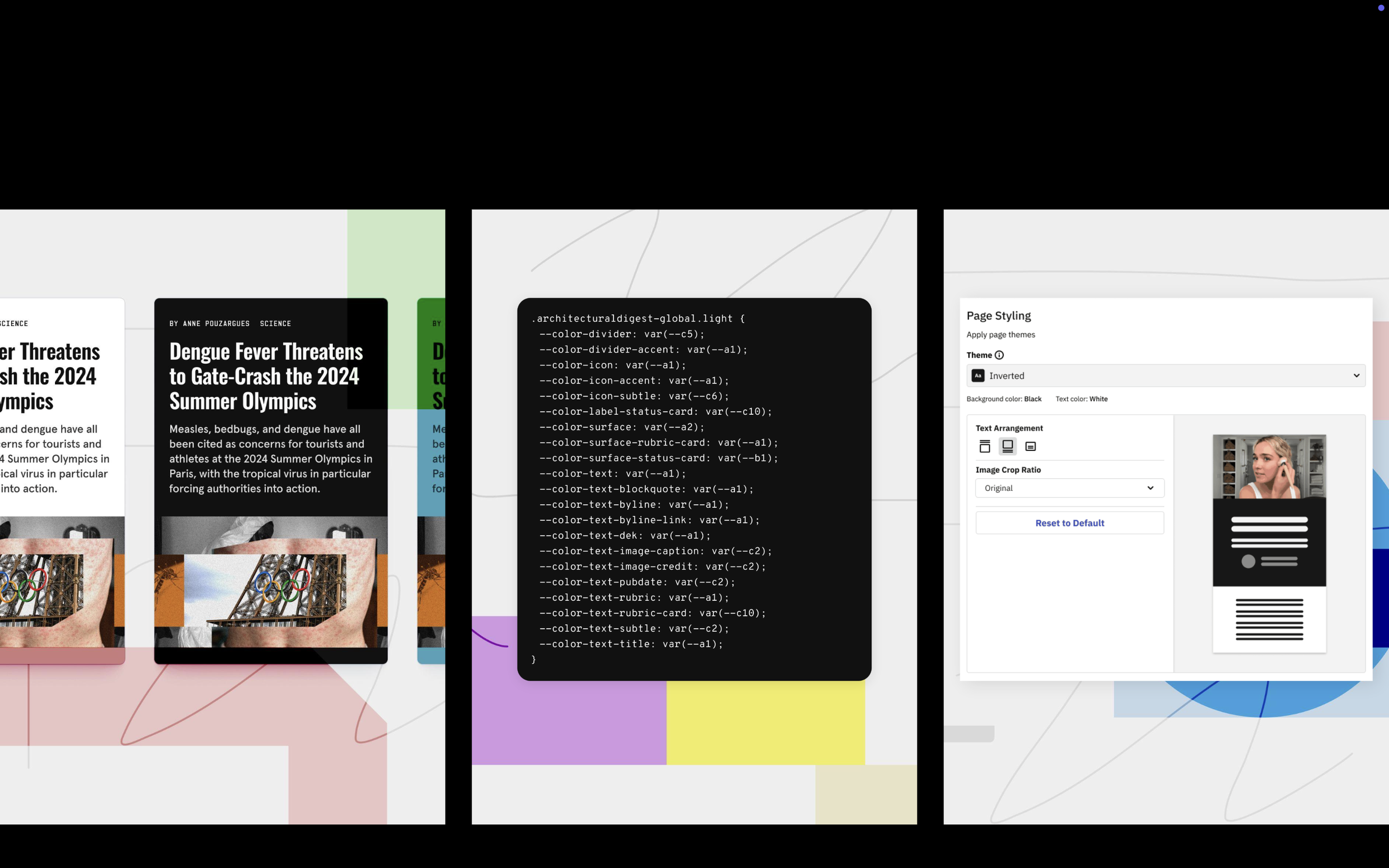
I introduced page theming as a core platform capability, moving expression out of one-off design efforts and into a governed system layer.
This allowed brands to shape tone, structure, and visual identity dynamically, while still operating within a shared framework.
Expression became a system capability, rather than something that sat outside it.
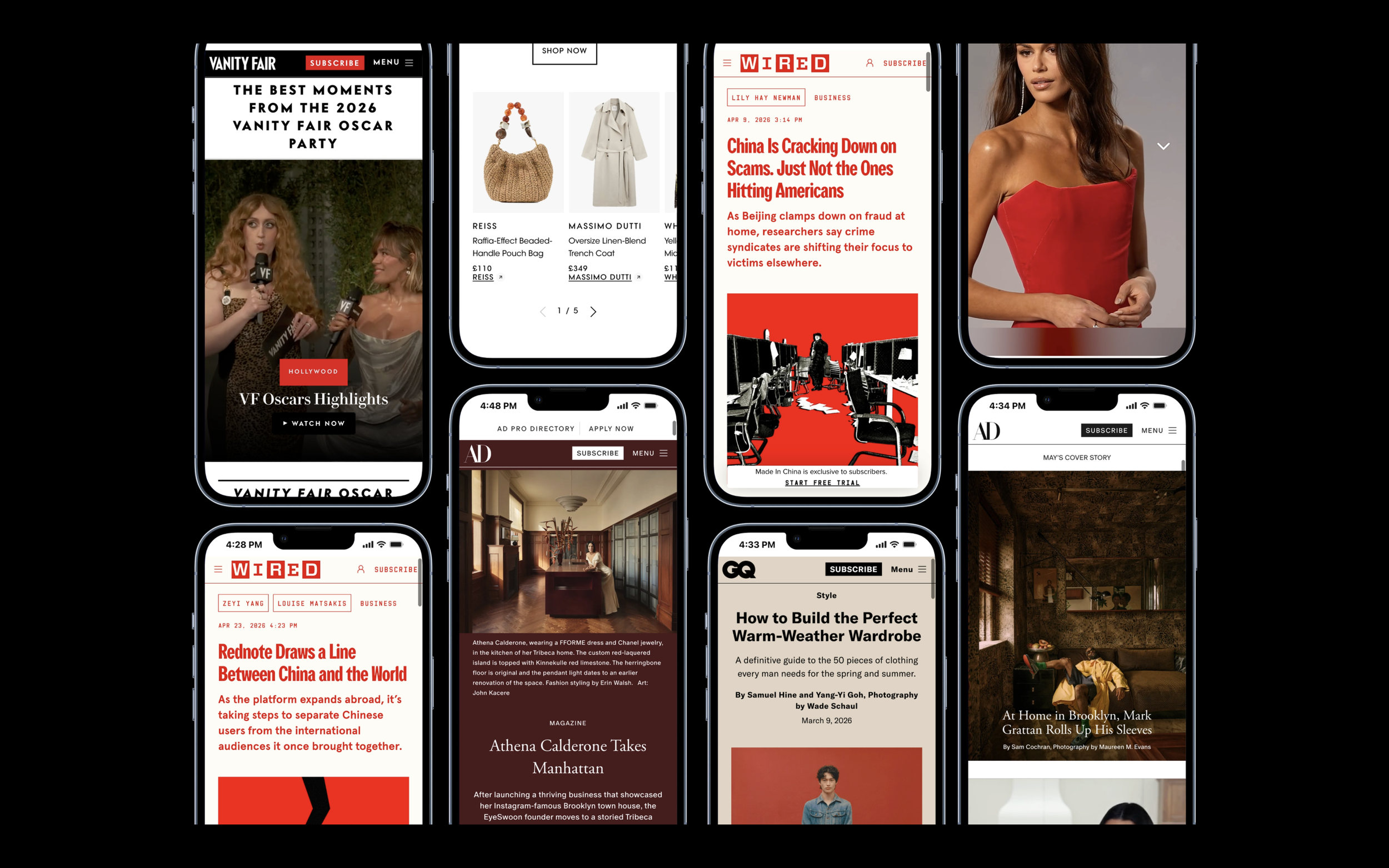
The proving groundArchitectural Digest became the proving ground for this approach.
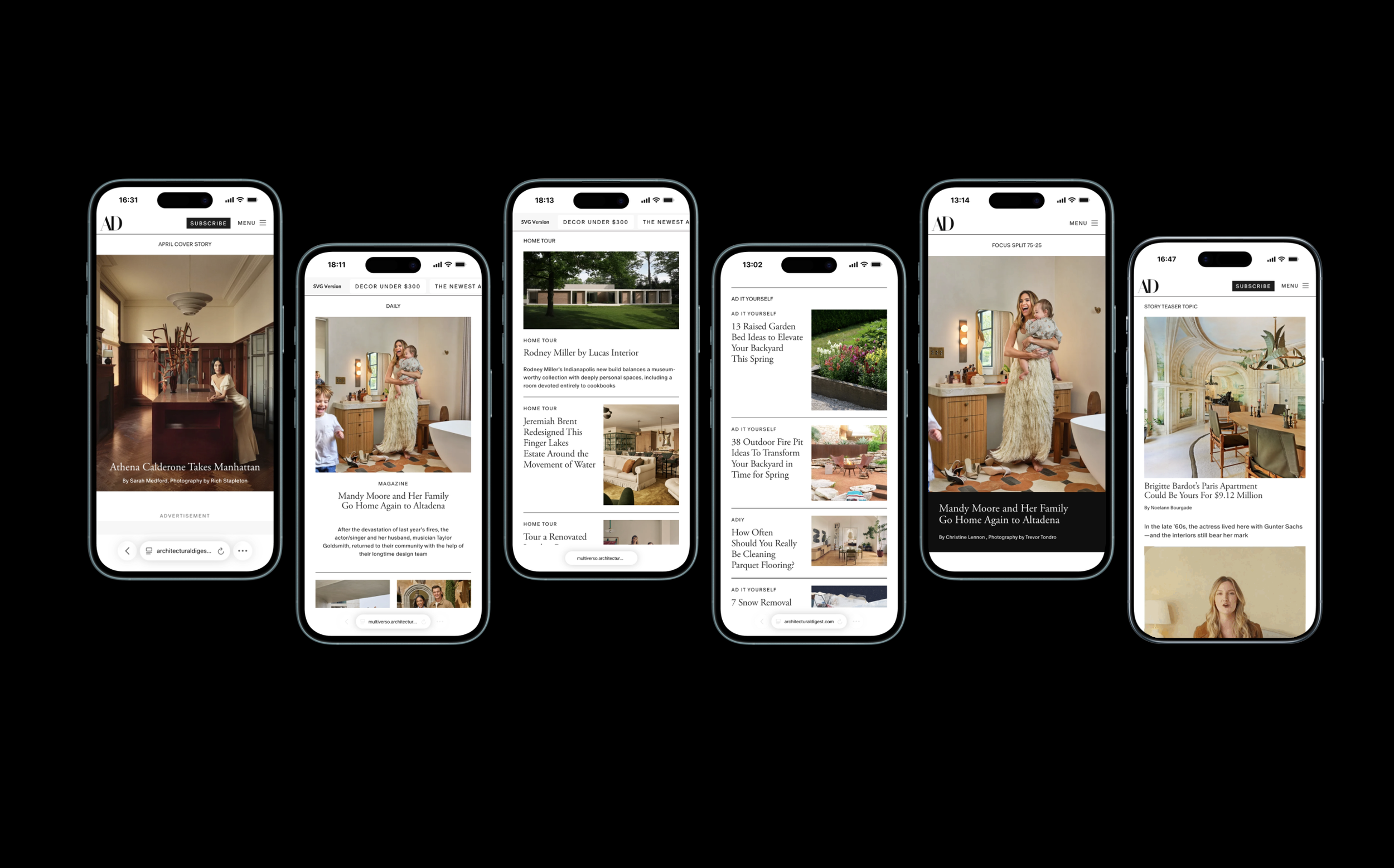
Starting with the homepage, I led the design of a flexible, scenario-based toolkit that could adapt to different editorial needs, from daily content to major editorial moments and event takeovers.
The homepage could shift its structure and tone depending on intent, while still being powered by the same underlying system.
This demonstrated that expression and consistency were not opposing forces, but could be designed to work together.
Closing the expression gapOne of the biggest gaps was in storytelling.
Historically, highly expressive stories relied on bespoke builds, which delivered impact but didn’t scale. At the same time, standard CMS templates enabled scale but limited creativity.
The opportunity sat between the two.
I reframed bespoke storytelling requests as reusable platform capabilities, introducing features such as layered hero treatments, visual navigation, and structured story formats.
This shifted the conversation from custom builds to reusable assets, allowing brands to create richer stories without breaking the system or increasing complexity.
Business valueAs quality became embedded in the system, the impact was both behavioural and commercial.
For Architectural Digest, the homepage redesign doubled weekly and monthly active users from 25% to over 50% within a quarter, demonstrating that a more expressive and adaptive experience can drive repeat engagement.
At the same time, the introduction of a new Feature storytelling template increased time spent and scroll depth by 5%, showing that richer, more structured storytelling formats directly increase engagement.
These outcomes informed broader business goals, including improvements in commerce click-through rates and monetisation through better content flow and placement, rather than increased ad density.
Once quality became systemised, it stopped being a design output and became a repeatable business driver.
+100% increase 25.0% to 50.34% WAU/MAU after Architectural Digest homepage redesign
+5% increase in time spent & scroll depth via new Feature storytelling template across AD and GQ.
Leadership roleThis work reframed quality as a product decision, not something applied at the end.
It required aligning teams around shared standards, embedding those standards into the platform, and enabling expression in a controlled and scalable way.
I led design through this shift, working across Product, Engineering, and Editorial to ensure that quality, storytelling ambition, and business performance reinforced each other rather than competing.
The result was a platform that could scale both consistency and creativity, without compromising either.